
Learning to pay off credit card debt fast became my obsession the month I realized interest was costing me more than groceries. I owed $6,800 across three cards and minimum payments felt like bailing out a boat with a teaspoon. So I built a ruthless system, attacked the highest rate first, and killed the whole balance in fourteen months. A tight budget is not a disadvantage here. It forces focus.
1. List Every Debt With Balance, Rate, and Minimum
You cannot fight what you cannot see, so write down every single debt first. Card name, current balance, interest rate, and minimum payment, all on one page. I avoided this step for months because I was scared of the total, and the total was $6,800. Seeing it written down hurt for exactly one evening, then it became fuel.
Include everything, even the store card you pretend does not exist. Total the balances and the monthly minimums so you know your starting line. This list becomes your war map, and you will love watching it shrink. Clarity first, action second.
2. Stop Using the Cards Today, Not Tomorrow
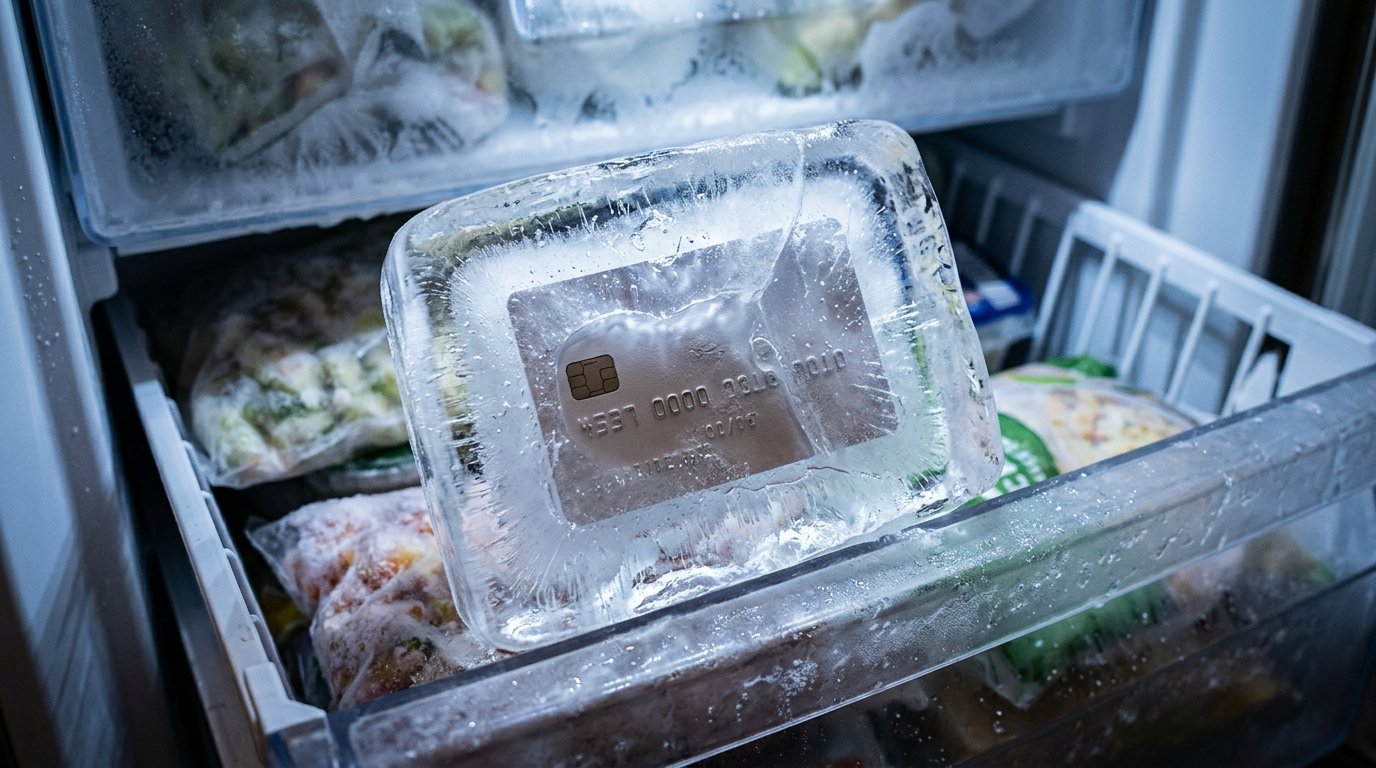
Paying off debt while still charging is like bailing water with the tap running. Take the cards out of your wallet today, delete them from shopping sites, and remove them from your phone. I froze mine in a block of ice in the freezer, dramatic but extremely effective. You cannot outpay new spending, so the spending stops first.
Switch to debit or cash for daily purchases immediately. Yes, it feels like a step backward, and that discomfort is the point. Every new charge resets your progress and feeds the interest machine. The cards stay frozen until the balances hit zero.
3. Build a $500 Mini Emergency Fund First
This feels backwards, but trust the process. Without a tiny cash cushion, every surprise expense lands right back on the credit card you are trying to empty. I saved $500 in a separate account before attacking debt, and it absorbed two car issues without touching a card. The cushion protects the payoff plan from real life.
Keep it small and separate, this is not your full emergency fund yet. Sell something, pause a subscription, or redirect one month of extra payments to build it fast. Once it exists, every dollar after goes to war against the debt.
4. Attack the Highest Interest Rate First to Pay Off Credit Card Debt Fast
Mathematically, the avalanche method wins: throw every extra dollar at the highest-rate balance while paying minimums on the rest. My 24 percent card was costing me $90 a month in interest alone, so killing it first saved the most money. Emotions might prefer quick wins, but math does not care about your feelings.
List your debts sorted by rate, highest at the top. That top line gets every spare dollar until it dies, then its payment rolls into the next target. Watching the most expensive debt vanish first is deeply satisfying. Let the math lead and the motivation follows.

5. Or Attack the Smallest Balance for Quick Wins
If you need momentum more than math, use the snowball method instead. Pay minimums everywhere, then throw everything extra at the smallest balance regardless of rate. Killing a $400 card in month one feels incredible, and that feeling powers month two. I know people who needed this psychological win to keep going.
Be honest about which type you are. Math people thrive on the avalanche, momentum people thrive on the snowball. Both methods work if you stick with them, and the best method is the one you will actually follow. Pick your fighter and commit fully.
6. Call Each Creditor and Ask for a Lower Rate
Believe it or not, this five-minute call saves real money and most people never make it. Phone each card company, mention you are considering a balance transfer, and ask for a lower APR. I got two of three cards reduced, one from 22 percent to 16 percent, just by asking politely. The worst they can say is no, which costs you nothing.
Call during business hours and be friendly but direct. If the first representative refuses, politely ask for a supervisor, because they often have more authority. Write down the new rate and the representative’s name.

7. Find $200 a Month You Did Not Know You Had
A tight budget still has leaks, and $200 a month changes the payoff timeline dramatically. Audit subscriptions, renegotiate your phone and internet bills, and pause every non-essential for ninety days. I found $230 by canceling four subscriptions and switching phone plans, money I had been lighting on fire monthly. Temporary sacrifice, permanent freedom.
Sell what you do not use for a lump-sum boost to the attack fund. My old bike and a stack of textbooks became $310 aimed straight at the highest-rate card. Every found dollar shortens the war. Scarcity sharpens creativity.
8. Automate Every Minimum Payment Right Now
Late fees and penalty APRs are budget killers you can eliminate today. Set every card to autopay at least the minimum, so a forgotten due date never costs you $30 plus a rate hike. Automation is free insurance against your own forgetfulness.
Then automate an extra payment to your target debt on payday. When payments happen automatically, willpower leaves the equation entirely. Set it, then focus on finding more dollars to feed it. Each automated extra payment moves your plan to pay off credit card debt fast forward without a single decision.

9. Throw Every Windfall at the Target Debt
Tax refunds, bonuses, birthday cash, and side gig money all go to the target debt, no debates. I threw a $900 tax refund at my highest-rate card and watched a year of interest vanish in one transfer. Windfalls feel like free money, which makes them dangerously easy to waste. Assigned windfalls are payoff accelerants.
Make this rule before the money arrives, because deciding in the moment always favors spending. Tell yourself the story in advance: unexpected money kills debt. I even redirected a $50 rebate check the day it arrived. Small windfalls count just as much as big ones.
10. Use Balance Transfers Only With a Written Plan
Used correctly, a zero-percent balance transfer can save serious interest, but only with a written payoff plan attached. Divide the transferred balance by the promo months to get your required monthly payment, then automate it. I transferred $3,000 to an 18-month zero-percent card and set $167 monthly autopayments. Without the plan, transfers just relocate the problem.
Watch for the transfer fee, usually 3 to 5 percent, and factor it into the math. Never use the new card for purchases, or the promo terms get messy. And never miss a payment, or the penalty rate is brutal.

11. Track the Total Number, Not Just Each Card
Watching one card shrink while others sit still can feel discouraging, so track the combined total instead. I kept a single number on my fridge, updated monthly: $6,800, then $6,100, then $5,200. Seeing the total fall kept me going through months when individual cards barely moved. One number tells the true story. That single falling number is what kept my plan to pay off credit card debt fast alive on the hardest months.
Graph it if you are visual; a downward line is incredibly motivating. Celebrate every thousand conquered, because each one represents real interest you will never pay.
12. Tell One Person Your Payoff Date
Accountability turns a private struggle into a public commitment. Tell a trusted friend your exact debt-free date and your current total. I told my sister, and her monthly “how is the number?” texts kept me honest on weak days. Shame thrives in secrecy, but progress loves a witness.
Pick someone supportive, not judgmental. You want a cheerleader, not a lecture. If no person fits, write the date on your bathroom mirror where you see it daily. Public goals get finished, private wishes get postponed.
13. Celebrate Milestones Without Spending Money
Reward progress, but never with purchases that restart the cycle. At each $1,000 milestone, I celebrated free: a long hike, a movie night at home, a fancy home-cooked dinner. The celebration marks the win without feeding the habit you are killing. Your brain needs the dopamine of progress, so give it free victories.
Plan the rewards in advance so they feel earned, not improvised. My final debt-free celebration was a picnic in the park that cost $12 in groceries. Marking milestones keeps the long war from feeling endless. Free joy is still joy.
14. Close the Trap Door So Debt Cannot Return
Killing the balance means nothing if the habits survive. Keep one card for building credit, automate it in full monthly, and keep the rest frozen or closed. I kept a single no-fee card, put one small recurring bill on it, and set autopay in full. The system that got you out becomes the system that keeps you out.
Redirect your old debt payments straight into savings the month after payoff. I moved my $450 monthly attack payment into investments and never felt the difference. Lifestyle stayed the same, wealth started growing.
FAQs
Should I use savings to pay off credit card debt fast?
Only the surplus beyond a small emergency cushion. Keep $500 to $1,000 in savings, then throw extra cash at high-interest debt. Draining savings to zero just means the next surprise goes right back on the card. Protect the cushion, then attack aggressively.
Is the avalanche or snowball method better for tight budgets?
Avalanche saves more money mathematically, snowball delivers faster psychological wins. On a tight budget, motivation matters enormously, so pick the one you will actually stick with. I have seen both work beautifully. Consistency beats optimization every single time. Your commitment matters more than the method name.
Will paying off debt fast hurt my credit score?
Temporarily it might dip, then it climbs higher than before. Lower utilization is one of the biggest score boosters, so killing balances helps enormously. Keep your oldest card open with occasional small purchases paid in full. The short-term dip is worth the long-term gain.
What if I can only afford minimum payments right now?
Then protect the minimums above all else and hunt for extra dollars aggressively. Even $50 extra a month on the highest-rate card shortens the timeline. Call creditors for lower rates, sell unused items, and pause subscriptions. Minimums keep you afloat, extras get you free.
How do I stop using credit cards while paying them off?
Remove them from your wallet, your phone, and every saved checkout on day one. Switch daily spending to debit or cash immediately. The physical friction of not having the card handy kills most impulse charges. Out of sight, out of debt.
Conclusion
Fourteen months after staring at $6,800 in balances, I made my final payment and felt lighter than I had in years. The system was never complicated: list it, stop the bleeding, attack the highest rate, automate everything. What is your debt-free date going to be?