

I have used a wheelchair since a car accident when I was nineteen, and nobody puts this in personal finance books: managing money is a different game when every errand takes planning. A “quick trip to the bank” is never quick. Delivery fees, accessible transport, and medical costs quietly inflate my budget in ways my walking friends never see. I built a system that handles almost everything from my phone, and my finances have never been calmer.
How Money Management Changes When Every Errand Takes Planning
Standard money advice assumes you can pop into a bank or swing by the store for a price check. When getting somewhere requires booking accessible transport, those assumptions break. I once spent $45 on rides to deposit a $200 check my phone could have handled in two minutes.
The fix is simple: automate everything automatable, do the rest by phone, and budget honestly for the extra costs instead of pretending they do not exist. My system costs nothing to set up and saves me hundreds of dollars and dozens of hours a year.
- Automate every recurring bill so nothing depends on a trip
- Do all banking by app, phone, and voice assistant
- Budget transport and delivery as their own honest category
- Keep a small cash buffer at home for real emergencies
1. Switch Every Bill to Autopay This Week
List every recurring bill: rent, utilities, phone, internet, insurance, subscriptions. Turn on autopay for each. For variable bills like electric, set a calendar reminder to check the amount three days before it drafts.
Autopay eliminates late fees forever and removes the need to physically get somewhere to pay. I have not paid a late fee in six years. Keep one checking account as your bills account so autopay never drafts empty.
2. Do Your Banking by Phone (Skip the Inaccessible Branch)
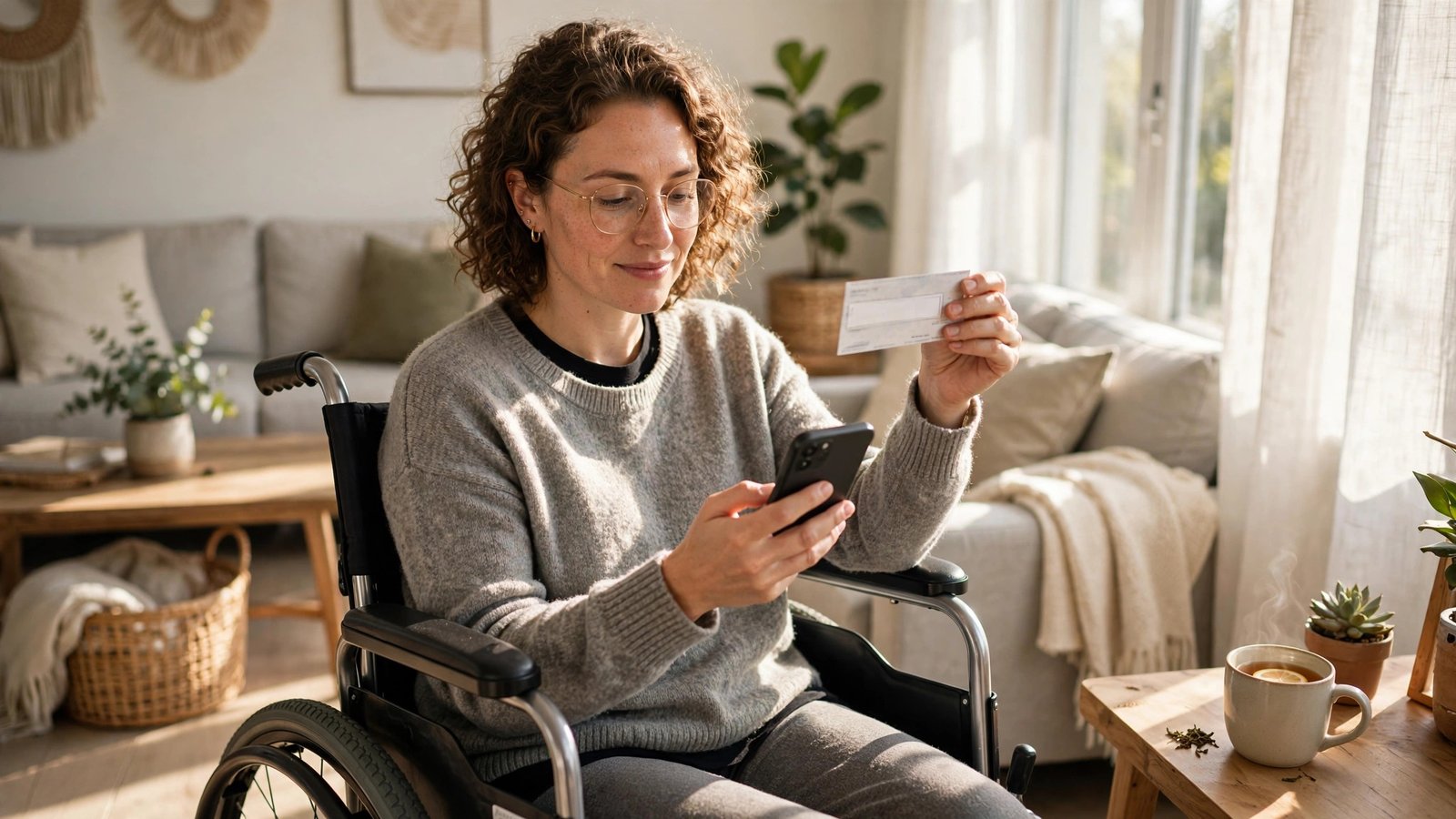
Banking apps do nearly everything a branch does: mobile deposit, transfers, bill pay, even opening accounts. If your bank’s app is not accessible with your screen reader or switch control, switch banks. Accessibility is a feature you are allowed to shop for.
Set up mobile deposit and test it with a small check first. The best branch is the one in your pocket.
3. Budget Your “Accessibility Premium” Honestly
Here is the expense most budgets ignore: the extra cost of access. Delivery fees, accessible rides at double price, the pricier accessible-floor apartment. Mine runs $80 to $120 a month, and for years I absorbed it invisibly while wondering why I could never save.
Give it its own budget line and fund it deliberately. Tracking it honestly stops the mystery month-end shortfall and shows exactly where the money goes. You cannot optimize a cost you refuse to name.
4. Use Subscription Delivery for Heavy Essentials
Groceries, toilet paper, cleaning supplies, pet food: the heavy stuff is hardest to transport and easiest to automate. A delivery subscription turns a logistical expedition into a doorstep event. Compare the fee against accessible transport to the store.
My $10 monthly delivery membership replaced $40 in monthly transport, and I stopped impulse-buying end caps. Order the same day weekly, keep a running phone list.
5. Use Voice Banking for Transfers and Balances
If phone typing is slow or difficult, your voice assistant is a banking tool. Most major banking apps work with Siri, Google Assistant, or Alexa for balances, and many support transfers by voice. “Hey Siri, check my checking balance” takes three seconds.
Voice shines for the quick checks that keep you out of trouble: balance before a purchase, confirming a deposit landed.

6. Keep Medical and Mobility Receipts in One Folder
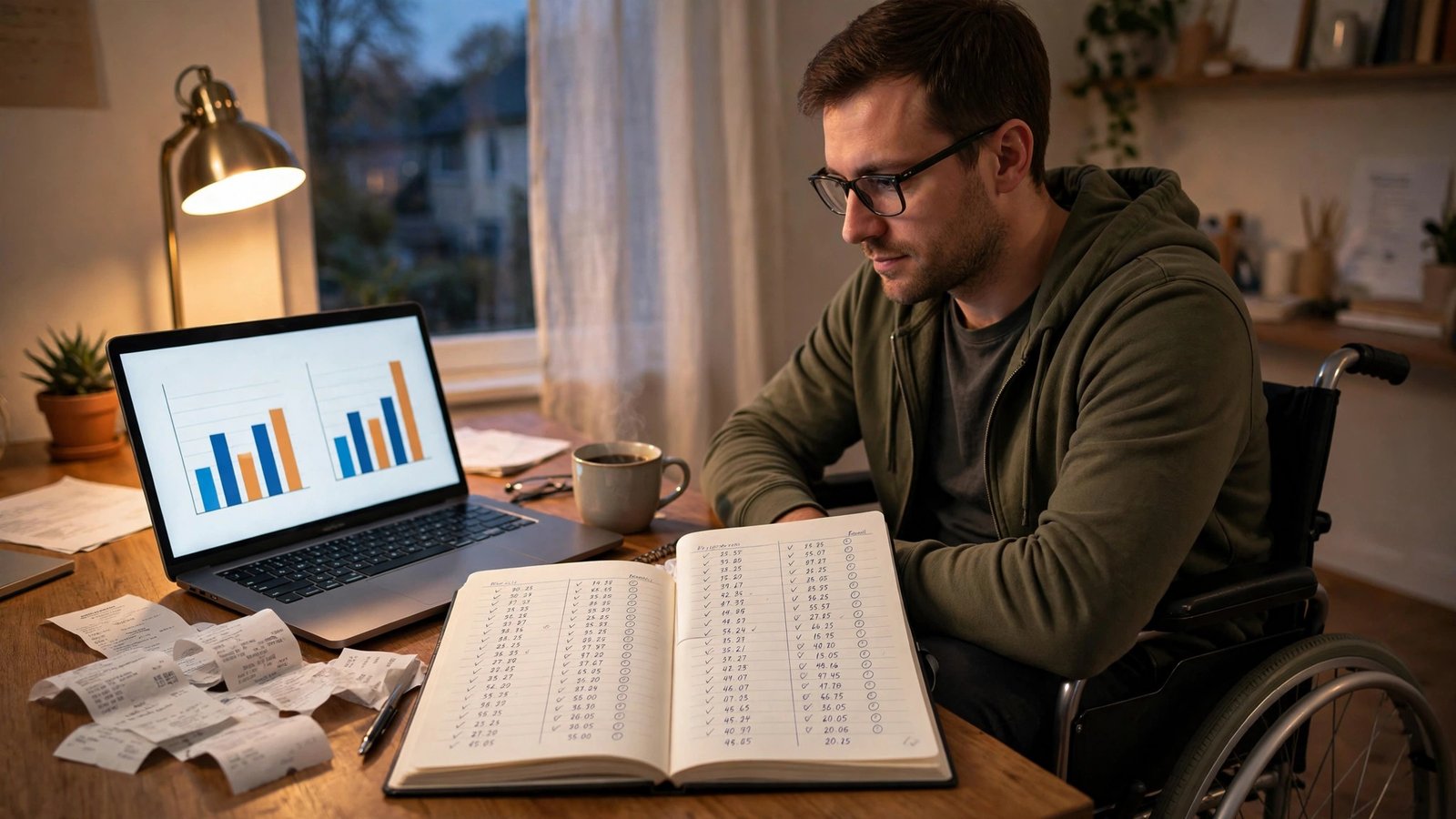
Chair maintenance, cushions, batteries, copays, therapy, home modifications: keep every receipt in one folder, physical or digital, sorted by year. They matter for tax deductions, insurance claims, warranties, and FSA reimbursements.
Medical expenses above 7.5 percent of adjusted gross income are deductible, and mobility equipment often qualifies. You will never hit that threshold with receipts scattered across drawers. One folder, reviewed every January.
7. Build a Repair Fund for Your Chair
Your wheelchair is your legs, car, and office chair combined, and repairs are not optional. Tires wear, batteries die, cushions compress. A dedicated fund of $30 to $50 a month turns a $300 tire replacement into an errand, not a crisis.
Keep it in a labeled savings bucket. Fix problems immediately instead of waiting; it is safer and usually cheaper.
8. Keep a Weekly Cash Stash at Home for Emergencies
Digital money fails when the power is out, the card reader is broken, or you need to pay a neighbor now. Keep $40 to $60 in small bills in a lockbox at home, replenished every Monday.
This is operational cash, not an emergency fund. The dead card reader, the attendant’s tip, the copay when systems are down. Sixty dollars at home has saved me more hassle than any app.

9. Compare Paratransit vs Rideshare Costs Monthly
Accessible transport pricing is a maze: paratransit fares, WAV rideshares, monthly passes, medical transport programs. Once a month, compare actual spending against alternatives. A $60 monthly pass beats $4 fares past fifteen rides.
Track every transport dollar in one category so the comparison is real. I found I was spending $140 monthly on on-demand rides when a $75 pass plus planning covered the same trips.
10. Use Cashback Cards for the Spending You Already Do
A no-annual-fee cashback card turns normal spending into 1 to 2 percent back. On $1,500 a month, that is $180 to $360 a year for doing nothing different. Set autopay in full monthly so you never pay interest.
Rules are strict: only planned spending, never carry a balance. The moment you pay interest, the math dies. I put every automatable bill on mine and pay it weekly. Free money with one rule.
11. Track Accessible-Transport Costs Separately Every Month
Your transport has two parts: standard travel and accessibility-driven travel. Track them separately for three months. You may find 40 percent of transport spending is the accessibility premium, which is actionable information.
With separated data, decide: is the pass worth it, should you batch errands, does delivery beat the trip? I batched errands onto two days weekly and cut transport spending by a third.
12. Ask About Discounts and Programs You Qualify For
A quiet world of discounts exists for those who ask: reduced disabled-rider transit fares, utility discount programs, the federal Lifeline phone discount, reduced park passes, property tax exemptions in many states. None advertise aggressively.
One afternoon of applications found me three programs saving about $60 a month: transit, utility, and internet discounts. That is $720 a year for one afternoon of paperwork. The programs exist because you qualify. Claim them.
13. Set Up Account Alerts for Everything
Turn on every bank alert: low balance, large purchase, bill due, deposit received, new-device login. Alerts are a free early-warning system, and they matter more when checking accounts takes effort. Let the bank come to you.
Set low-balance alerts $100 above zero so you can still act. I caught a double-billed subscription and a fraudulent $200 charge within hours through alerts. Automation plus alerts means your money watches itself.
14. Name a Trusted Person for Emergency Account Access
If you were hospitalized tomorrow, could someone trusted pay your bills? A durable power of attorney for finances, often under $100 or free through legal aid, lets a chosen person handle your money if you cannot.
Tell your person where the bills account is, what drafts when, and where passwords live. Ten awkward minutes now prevents months of chaos later. It removes a single point of failure, like autopay does.

Mistakes That Quietly Drain Money
The sneakiest drain is stacked convenience fees: delivery plus service fee plus tip, three times a week. Together they can top $150 a month. Batch orders onto fewer days and hit free-delivery minimums.
Second is unaudited subscriptions nobody cancels because it requires a dreaded phone call. List them quarterly. Third is paying for accessibility twice: ordering delivery on a day a batched errand run would have been free. Plan the week and the double-paying stops.
A Simple Accessible Banking Setup
My complete setup, free and phone-based: one checking account for bills with autopay on everything; one high-yield savings with labeled buckets for the emergency and chair repair funds; one cashback card on autopay in full for planned spending. Mobile deposit on, voice assistant linked, alerts for everything.
Maintenance: fifteen minutes a month reviewing alerts. No branches, no paper, no trips. If your bank’s app fights your assistive tech, switch banks. Your bank works for you, not the other way around.
Conclusion
That $45 ride to deposit a $200 check rebuilt my entire financial life. Automate the bills, bank from your phone, budget access costs honestly, keep a little cash at home. Money management does not have to be built for walking. Build it for your life, and it works.